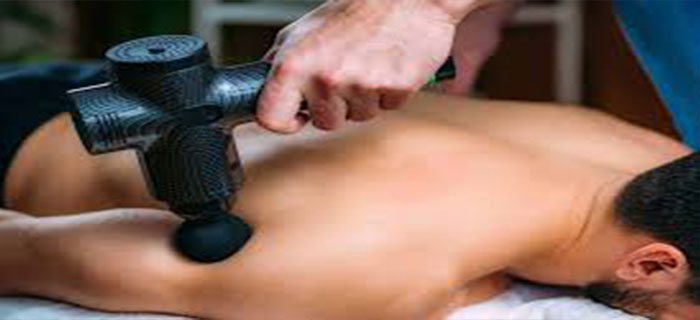
Sore legs after a workout, a stiff neck after a long desk day, or that heavy, cramped feeling after travel, those are the moments when a Massage Gun starts to make a lot of sense. It’s quick, it’s easy to use at home, and when you do it right, it can help your muscles feel looser in minutes.
A massage gun is a handheld device that uses fast tapping (percussion) to relax tight muscles and reduce soreness. People like it because it fits real life: a 5-minute session before bed, a quick reset after the gym, or a simple way to wake up tight hips and calves after sitting.
In this guide, you’ll learn what massage guns can realistically do (and what they can’t). We’ll cover the main benefits, how to use one safely without bruising yourself, how to choose a good model (noise, speed settings, battery, attachments), and when it’s smarter to skip the gun and get help instead.
Massage guns are helpful for everyday tension, but they don’t replace skilled hands for every problem. If pain keeps coming back, you’re dealing with an injury, or an area feels sharp, numb, or swollen, a professional massage therapist is often the safer option. If you want a broader look at hands-on care, this massage guide for types and benefits can help you compare what works best for your goal.
Massage gun basics: what it does, how it works, and what it can help with
A Massage Gun is basically a power tool for your muscles, but with a softer goal. Instead of drilling, it uses fast tapping pulses (called percussive therapy) to help tight areas feel more relaxed. When people say they have “knots,” they usually mean a spot that feels hard, tender, or stuck, like a little ball under the skin that complains when you press it.
Used well, a massage gun can help you feel looser, reduce that heavy post-workout soreness, and make movement feel easier. Still, expectations matter. Results vary, and the research is growing, not settled. Think of it as a helpful recovery option, not a magic fix.
How percussive therapy works (without the science overload)
Inside every Massage Gun is a small motor that spins fast. That motor drives a moving arm, which pushes the massage head in and out, kind of like a tiny piston. When the head “taps” your body, it creates quick pulses into the muscle. Those pulses can help your nervous system calm down around that area, so the muscle lets go a bit.
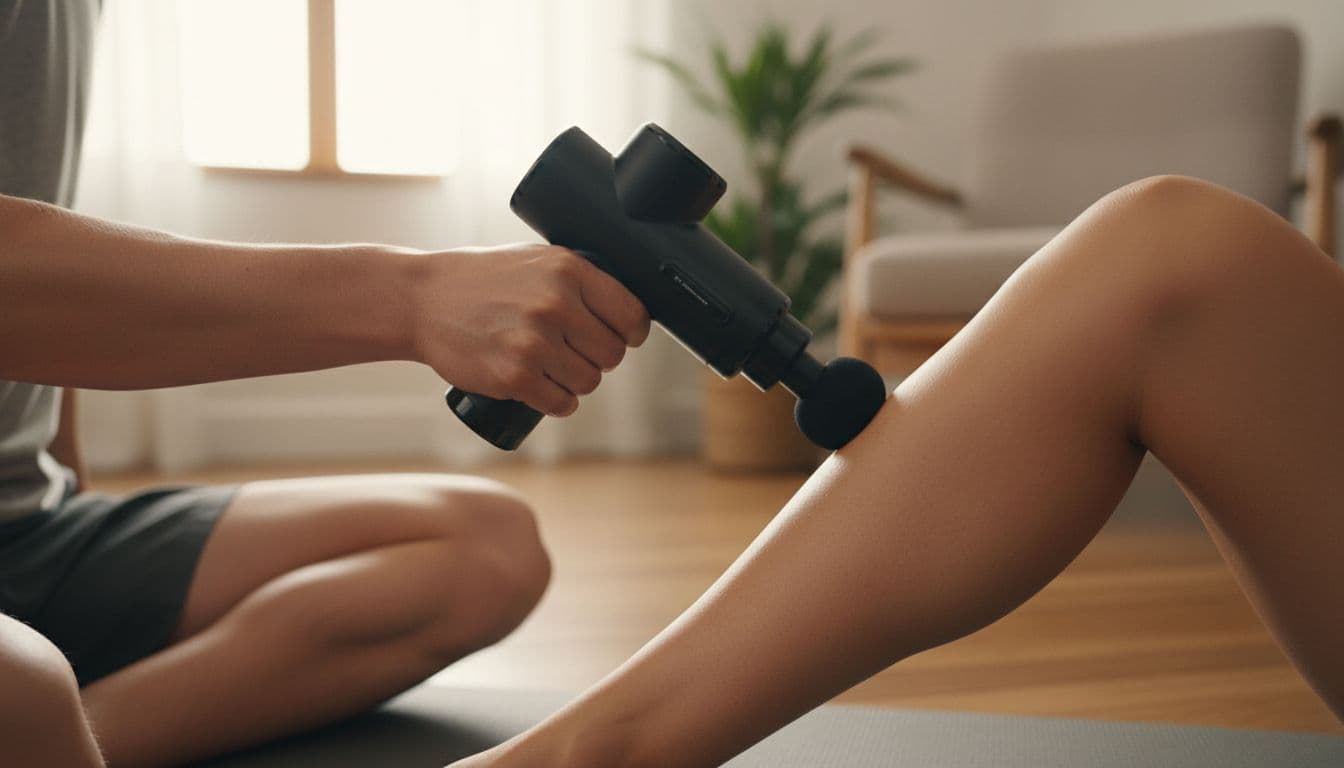
A simple way to picture it: if a tight muscle feels like a clenched fist, percussive tapping is like gently knocking on the door until the fist starts to open. You are not “breaking up” muscle. You are telling the tissue it can stop guarding.
Two settings matter most when you shop or when you use it:
- Speed: How fast it taps. Higher speed feels more intense and buzzy, lower speed feels more controlled.
- Amplitude: How far the head moves in and out. Bigger amplitude means deeper movement, even at the same speed.
If speed is the number of taps, amplitude is the depth of each tap. Many people do better starting with lower speed and moderate pressure, then adjusting from there.
So why do newer 2026 models keep talking about quiet motors and app routines? Because real life is loud enough. A quieter motor makes it easier to use at night, in an apartment, or while watching TV, without feeling like you started a lawnmower. Meanwhile, guided routines in companion apps are popular because they reduce guesswork. Instead of randomly attacking your calves for 10 minutes, the app suggests timing, attachment choice, and safer zones to avoid.
Quick rule: Let the gun do the work. If you have to press hard to “feel it,” you are more likely to irritate the area.
Main benefits people notice: soreness relief, better movement, and faster warmups
Most people reach for a Massage Gun for one simple reason: they want their body to feel better today. The most common wins are soreness relief, easier movement, and a faster warmup when your body feels stiff.
Post-workout soreness is a big one, especially in the legs and glutes. After squats, hills, long runs, or a new routine, your quads and hamstrings can feel like they are “full” and heavy. A few short passes with a massage gun often makes those muscles feel less cranky. It does not erase soreness for everyone, but many people notice the area feels more comfortable and less tight.
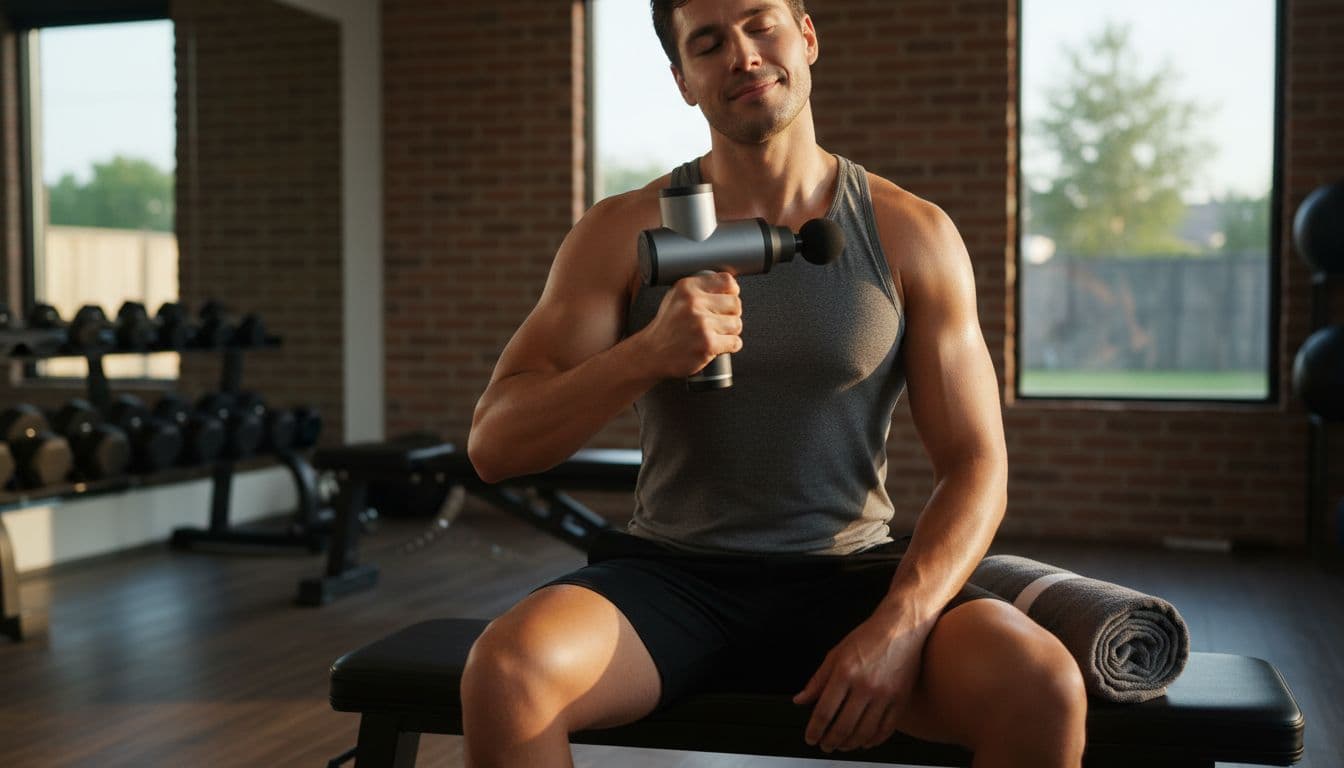
Desk neck and shoulders are another common use case. If you sit for hours, your upper traps, chest, and the back of your shoulders can feel stuck. Percussive tapping can help those areas feel less guarded, especially when you pair it with a slow shoulder roll and a posture reset.
Lower back tightness is tricky, but still common. Many people aim the gun at the muscles around the lower back, hips, and glutes (not directly on the spine). Often, it is the surrounding tissue that feels tight, not the bones or joints themselves. Used gently, a massage gun can feel like a fast “reset” after a long day.
General stiffness is where it shines for everyday users. Calves after travel, hips after sitting, feet after long standing shifts, or forearms after gripping and typing, these are all areas where quick pulses can make you feel more mobile.
One of the most practical benefits is range of motion. You know that feeling when you try to squat, reach overhead, or bend down, and your body says “nope”? Some studies suggest percussive therapy can improve flexibility in the short term for some people, and may reduce pain for some users. It is not guaranteed, but it is common enough that athletes and gym-goers use it before training.
Here is why the pre-workout use feels so good: a massage gun can help you feel “switched on” without the sleepy effect some people get from longer massages. It is like tapping the gas pedal a little so movement feels smoother.
If you want a bigger menu of recovery options beyond a device, compare hands-on sessions and styles on the Nairobi Massage & SPA massage therapy types page. Sometimes the best tool is still skilled hands, especially when tightness keeps returning.
What a massage gun cannot do (so you do not waste time or make pain worse)
A Massage Gun can be helpful, but it has limits. The biggest mistake is treating it like a fix for everything. Percussive therapy can calm tight tissue, but it cannot diagnose what is going on, and it cannot rebuild strength or stability that your body may be missing.
First, it will not heal an injury by itself. If you strained a muscle, irritated a tendon, or tweaked a joint, hammering the area can make it angrier. In those cases, you need the right plan, which may include rest, gradual loading, and professional guidance.
Second, it cannot replace a proper diagnosis. Pain can come from many sources, including irritated nerves, referred pain, or joint issues. A massage gun does not tell you which one you have. If something feels off, do not keep “testing” it with more intensity.
Third, it cannot match a full-body, customized professional massage. A therapist can feel tissue changes, adjust pressure in real time, and work across connected areas (like hips plus calves plus feet). They can also avoid sensitive structures automatically. If you are dealing with long-term tension or deeper discomfort, a session like deep tissue massage may be a better fit than trying to brute-force a stubborn spot at home.
Be extra cautious if you have chronic pain, nerve symptoms, or sharp pain. Those are signs you should slow down and get professional input. “Good discomfort” feels like pressure and release. Sharp pain feels like a warning.
Stop using the massage gun and seek care if you notice any of these red flags:
- Numbness in the area or down the limb
- Tingling or “pins and needles” that does not go away
- Sudden swelling or a hot, puffy joint
- Severe pain, especially if it ramps up quickly
- Fever or feeling unwell along with body pain
- Unexplained bruising, especially if it spreads or appears easily
Also, do not use a massage gun directly on bones, joints, the front of the neck, or any area with broken skin. Avoid varicose veins and areas where you suspect inflammation. When in doubt, stay on larger muscle groups and keep sessions short.
A helpful mindset is this: use the massage gun to support recovery, not to win a battle with your body. If a spot keeps flaring up, that is useful information, not a challenge to press harder.
How to use a massage gun safely and get better results in less time
A Massage Gun works best when you treat it like a timer-based tool, not a “push harder” tool. Most people waste time by staying too long on one spot, cranking the speed too high, or pressing until they tense up. That turns a recovery device into a bruise machine.
Instead, use short, repeatable passes with clear timing. Keep the head moving on the muscle belly, adjust speed before you add pressure, and cap the session so your tissue doesn’t get irritated. If you do that, you’ll feel better faster, and you’ll be more consistent.
A simple step-by-step routine for beginners (before exercise and after)
The fastest way to get results is to match your routine to the goal. Pre-workout is about “waking up” the muscle and getting it ready to move. Post-workout is about calming things down and reducing that tight, heavy feeling later.
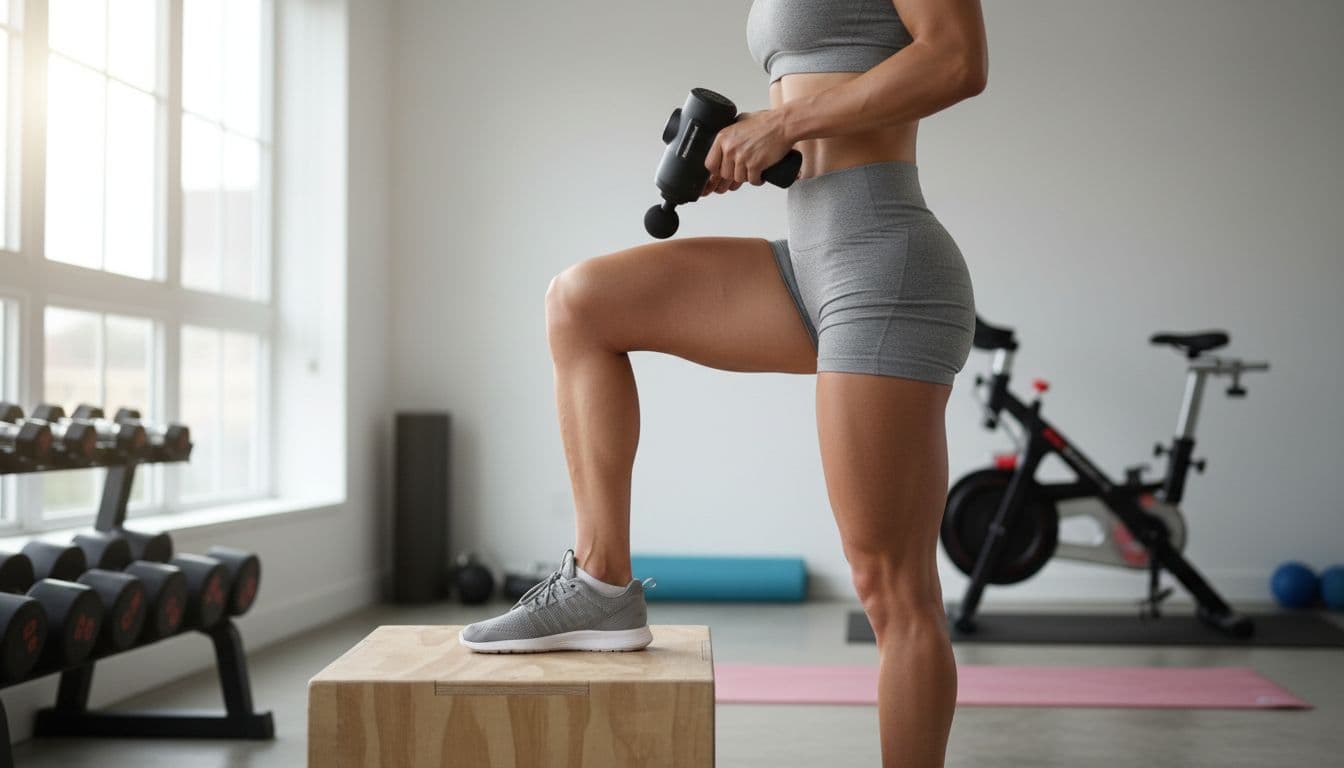
Pre-workout routine (quick warm-up, low to medium speed)
Keep this short. You’re not trying to “fix” tightness here. You’re telling your nervous system, “We’re about to work.”
- Pick 2 to 4 big muscle groups you’ll use today (for example, quads, hamstrings, glutes, calves, upper back).
- Start low, then go to medium speed after 10 seconds if it feels smooth.
- Use quick passes, moving about 2 to 5 cm per second across the muscle.
- Spend 30 to 60 seconds per muscle. If a spot feels tender, don’t camp there. Do 2 to 3 quick passes over it and keep moving.
- Finish with 30 to 60 seconds of active movement (bodyweight squats, arm circles, or a brisk walk).
A simple example before a leg day:
- Quads: 45 seconds each side
- Hamstrings: 45 seconds each side
- Glutes: 60 seconds each side
- Calves: 30 seconds each side
That’s enough to feel warmer without making your muscles feel “sleepy.”
Beginner rule: If you feel less steady, weaker, or overly loose, you did too much. Next time, cut the time in half.
Post-workout routine (recovery glide, slower and lighter)
After training, your tissue is more sensitive. This is where people overdo it and then wonder why they feel worse the next day. Go lighter than you think.
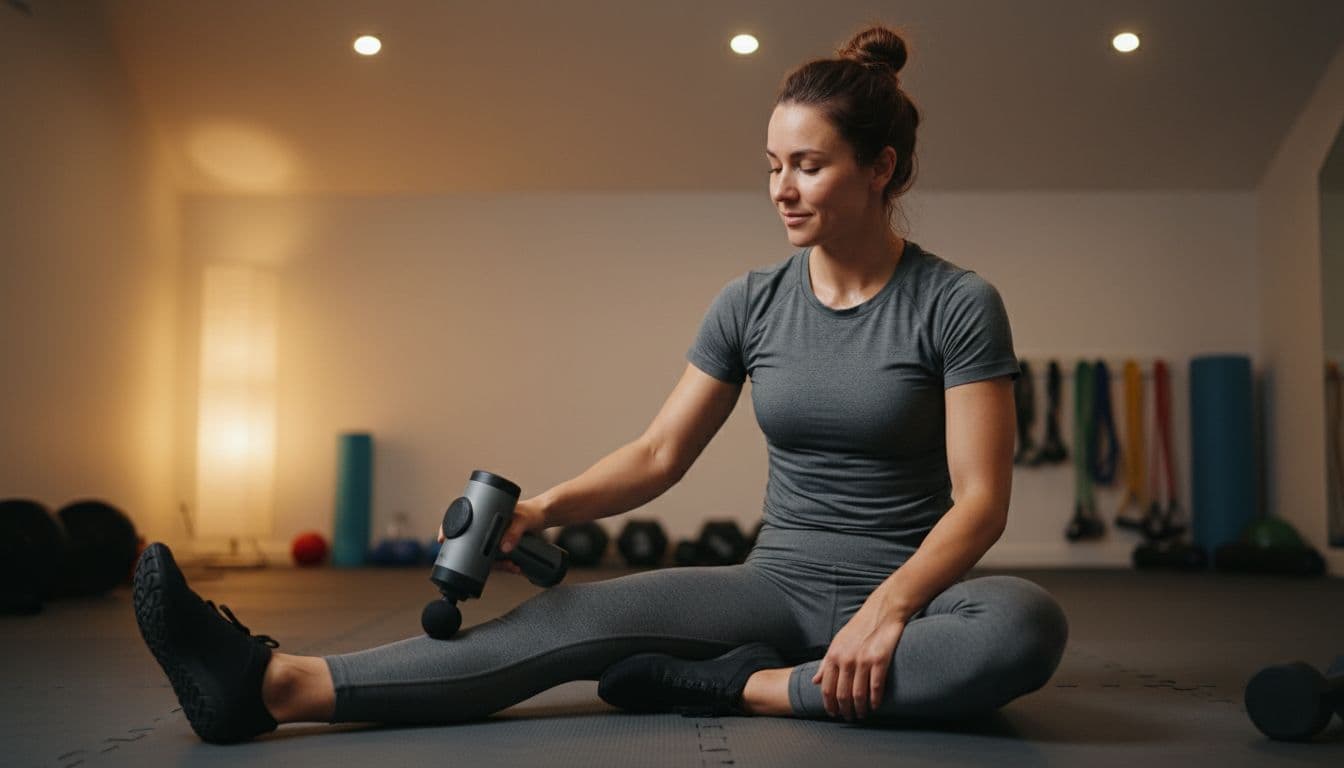
Use this pattern:
- Wait until your breathing settles and your heart rate comes down.
- Choose a low to medium speed, then stay there.
- Glide slowly, about 1 to 3 cm per second.
- Spend 60 to 120 seconds per area, using lighter pressure than pre-workout.
- Breathe on purpose. Exhale as you pass over the tender parts.
- Pair it with gentle stretching right after, 20 to 30 seconds per muscle (nothing aggressive).
A simple post-workout leg recovery example:
- Calves: 60 seconds each side, slow glide
- Quads: 90 seconds each side, light pressure
- Glutes: 90 seconds each side, light pressure
- Then gentle hip flexor stretch and hamstring stretch
Total time cap, and why it matters
Keep the whole Massage Gun session around 10 to 15 minutes max, even if you’re switching areas. More time doesn’t always mean more recovery. Past that point, many people start to irritate nerves and small blood vessels, which can feel like lingering soreness.
How to know you’re using too much pressure
Pressure should feel like a firm hand, not a thumb digging for punishment. Back off if you notice any of these:
- Pain that makes you hold your breath or makes your face tighten
- Bruising later, or skin that looks angry and blotchy
- Guarding (your body flinches or tries to pull away)
- Tensing up in the muscle you’re trying to relax
- Sharp, zinging, or burning sensations
If any of those show up, lower speed first, then lighten pressure, then shorten time. You’ll usually get better results with less force.
How often per week?
Most regular gym-goers do well with:
- Pre-workout: 3 to 6 days per week, but keep it brief
- Post-workout: 2 to 4 days per week, focused on what you trained
- Rest days: 1 to 2 short sessions if you’re stiff, not as a daily marathon
Consistency beats intensity. Think “brush your teeth,” not “deep-clean the whole house.”
Where to use it, where to avoid it, and what “good discomfort” really means
A Massage Gun is safest and most effective on thick muscle where you can clearly feel the “meat” of the muscle. Problems happen when you drift onto bones, joints, or sensitive areas packed with nerves and blood vessels.
Safe targets (good places to start)
These areas usually handle percussive work well when you keep the head moving:
- Quads: Front of the thigh, stay off the kneecap.
- Hamstrings: Back of the thigh, avoid behind the knee.
- Calves: The muscle belly, avoid the shin bone and Achilles tendon.
- Glutes: Great for tight hips, go slow and stay on soft tissue.
- Upper back: Between shoulder blades, avoid the spine itself.
- Lats: Side of the back under the armpit area, but don’t go into the armpit.
- Forearms (with care): Use lighter pressure and shorter time.
A quick technique check: aim for the muscle belly, the thick part that contracts when you flex. If it feels bony or “thin,” move an inch to the side.
Areas to avoid (common mistake zones)
Skip these areas because they’re high risk and low reward:
- Spine bones and the bony ridges of the back
- Front of the neck and throat
- Face and head
- Armpit
- Groin
- Behind the knee
- Joints (knees, elbows, ankles, wrists)
- Fresh injuries, strains, or suspected tears
- Open wounds, rashes, or broken skin
- Inflamed or hot areas that feel swollen or tender to touch
If an area feels numb, pins-and-needles, or unusually cold, don’t use a Massage Gun there. You need normal sensation to stay safe.
“Good discomfort” vs “bad pain” (don’t ignore the difference)
“Good discomfort” gets misunderstood. It should feel intense, but also oddly relaxing, like a stretch you can breathe through.
Here’s the line:
- Good discomfort: strong pressure, warmth, a feeling of release, you can keep your jaw unclenched.
- Bad pain: sharp, burning, electric, stabbing, or anything that makes you brace.
A helpful target is 4 to 6 out of 10 on an intensity scale. If you drift to a 7 or higher, you usually tense up, and that defeats the purpose.
Technique rules that prevent most mistakes
Small tweaks change everything:
- Keep the head moving the whole time. Don’t park on one spot.
- Stay flat to the muscle, not angled into a bone.
- Use slow, overlapping passes, like mowing a lawn in neat rows.
- Limit “hot spots” to 20 to 30 seconds total, then move on.
- Relax your grip. A death grip often equals too much pressure.
If you find yourself chasing the same knot every day, zoom out. Work the surrounding area (for example, glute plus quad plus calf), then finish with gentle movement.
Attachments and speeds: how to pick the right head for each area
Attachments aren’t just extras. They change how force spreads into your tissue. If you pick the wrong head, you’ll either feel nothing, or you’ll feel too much too fast.
Start with the lowest speed every time. After 10 to 15 seconds, increase one level if the muscle feels calm. Speed is intensity, but pressure is intensity too. Change one at a time so you know what’s working.
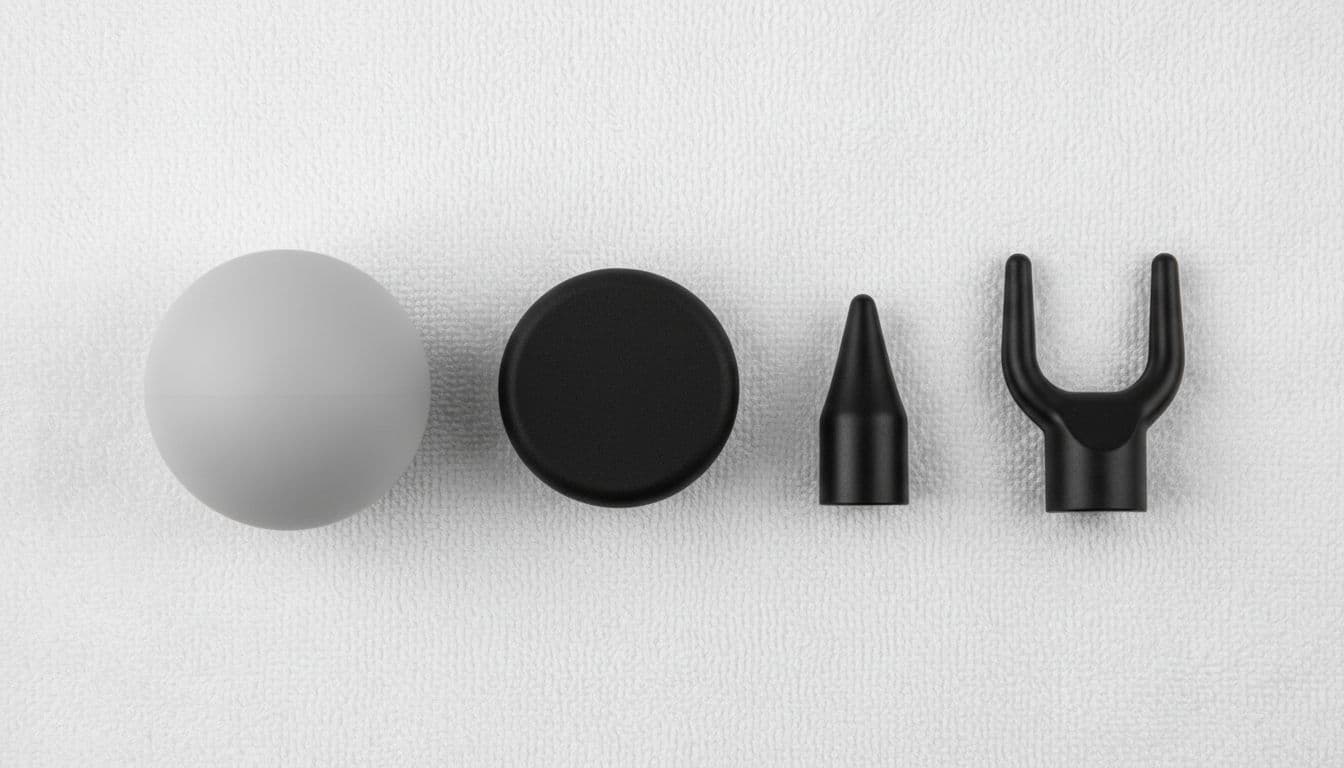
Common heads, and what they’re best for
- Ball head (general use): Soft, forgiving, and great for most beginners. It spreads pressure well, so it’s harder to overdo.
- Flat head (broad areas): Good when you want an even feel across a wide muscle.
- Bullet head (small trigger points, be careful): Very focused. Use light pressure and short time, because it can irritate tissue fast.
- Fork (U-head): Made to work around structures like the Achilles area, or alongside muscles, not directly on bone.
Easy pairings by body area (practical examples)
Use these as starting points, then adjust based on comfort:
- Glutes: Ball head, low to medium speed, 60 to 120 seconds per side.
- Quads: Flat head (or ball), low to medium speed, steady glides.
- Hamstrings: Ball head, low speed post-workout, keep it slow.
- Calves: Fork or ball, low speed, work the calf muscle belly, avoid the shin bone and don’t press into the Achilles tendon.
- Upper back: Ball head, low speed, stay beside the spine and on muscle.
- Lats: Ball head, light pressure, avoid drifting into the armpit.
- Forearms: Flat head, low speed, 30 to 60 seconds, lighter than you think.
If you only use one attachment, make it the ball. It’s the most forgiving for everyday use.
Speed selection that actually makes sense
Instead of chasing “deep,” match the speed to the moment:
- Low speed: recovery, sensitive areas, first-time use, tight days
- Medium speed: warm-up, larger muscles, when tissue already feels calm
- High speed: rarely needed, and usually too much for beginners
If you feel like you need high speed to get relief, you may be pressing too hard, or you’re working the wrong area.
Clean the attachments, and treat your skin like it matters
Gym sweat plus bacteria plus a shared device is not a great mix. A little hygiene prevents breakouts and funky smells.
- Wipe the attachment after each use with a gentle disinfecting wipe, then let it dry.
- Wash sweaty skin first if you can, especially after the gym.
- Don’t use it over lotions that make the head slip and pull skin.
- If you share the device, clean before and after, every time.
Also check the attachment for cracks. A damaged head can feel sharper and irritate your skin.
Who should be extra careful or skip a massage gun entirely
A Massage Gun is not for every body, and that’s okay. Certain health situations raise the risk of bruising, bleeding, or serious complications. When in doubt, ask a doctor or physio first.
Consult a clinician first if any of these apply
Be cautious and get guidance if you have:
- A history of blood clots, or you suspect one
- Blood thinners or a bleeding disorder
- Recent surgery or healing incisions
- Fractures or suspected fractures
- Severe osteoporosis
- A pacemaker or other implanted devices
- Uncontrolled high blood pressure
- Pregnancy, especially avoid the abdomen and low back
- Active cancer treatment areas (or cancer in the area you want to treat)
- Painful varicose veins
- Unexplained swelling, warmth, or redness in a limb
If a spot is swollen for no clear reason, don’t “massage it out.” Swelling is a signal, not a challenge.
When it’s smarter to skip it that day
Even if you’re usually fine, don’t use the gun on:
- Fresh sprains or strains
- Inflamed, hot, or throbbing areas
- Numb areas where sensation is reduced
- Broken skin or rashes
Rest, gentle movement, and professional assessment often beat more intensity.
A quick note for teens and kids
Teens and kids should use a Massage Gun only with adult guidance, and only on safe, large muscle groups. Keep speed low, time short, and never use it to push through pain.
Buying a massage gun that fits your body, budget, and routine
Buying a Massage Gun can feel oddly stressful. There are dozens of models that claim “deep tissue,” “pro power,” and “ultra-quiet,” yet many of them feel the same once you turn them on.
A smarter approach is to start with your routine. Are you using it three times a week after training, or once in a while for a stiff neck? Do you need something quiet for an apartment, or strong enough to handle thick glutes and quads? When the device matches your real life, it stops collecting dust.
The features that actually matter: power, noise, battery life, and grip comfort
Most specs look technical, but you only need a few to choose well. Think of a massage gun like a toothbrush. Bristles matter, but the handle and motor decide if you actually use it daily.
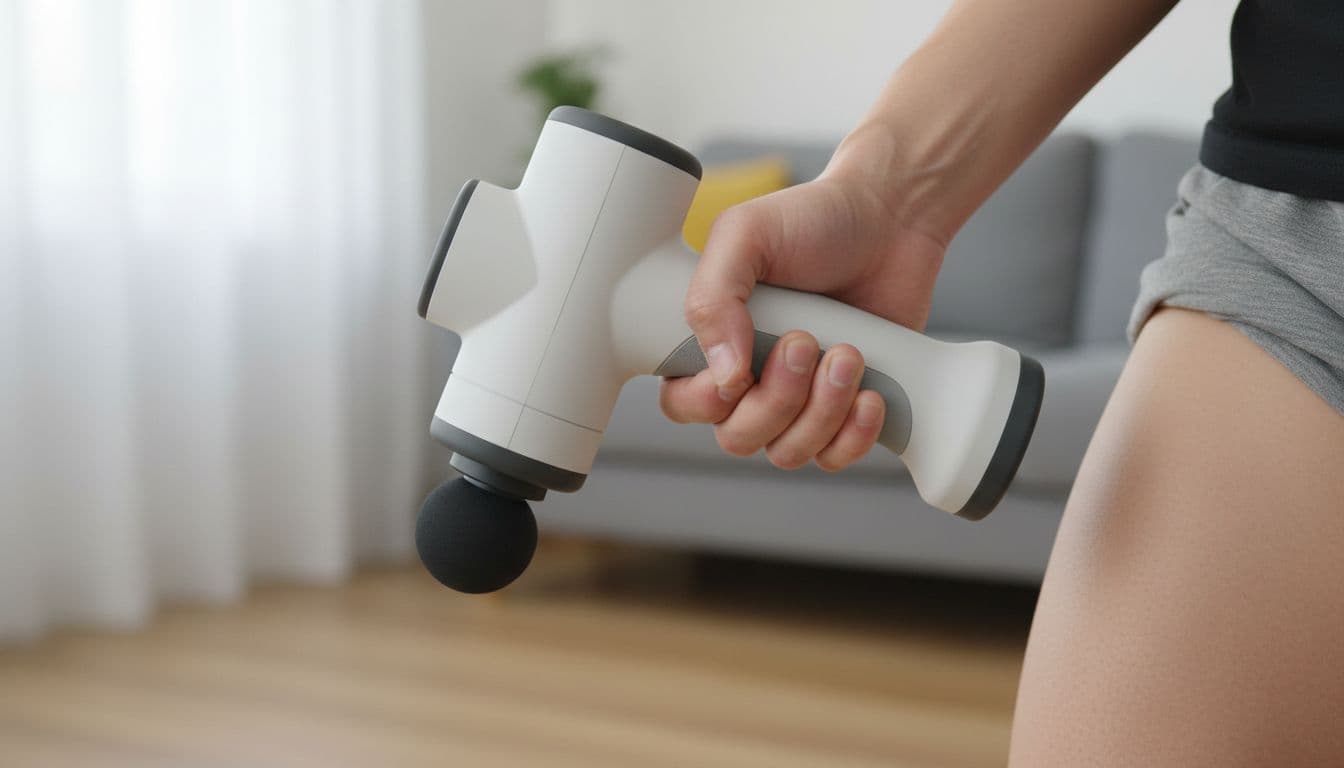
Amplitude (how deep each “tap” travels)
Amplitude is how far the head moves in and out. In plain terms, it’s the depth of the tap.
- Higher amplitude (often around 16 mm in stronger 2026 models) tends to feel deeper on thick muscles like glutes, hamstrings, and quads.
- Lower amplitude (often 10 to 12 mm in many budget models) can still work well for lighter soreness, arms, and calves, especially if you prefer a gentler feel.
If you mostly want a relaxing “buzz” for daily tension, you don’t need maximum amplitude. On the other hand, if you plan to use it on big legs after hard training, more amplitude usually feels more effective with less pressing.
Stall force (how well it keeps going when you press)
Stall force is simple: does the Massage Gun keep punching when you lean in, or does it stop?
A low stall force model can feel fine on paper, then quit the moment you apply real pressure. That’s frustrating, and it often makes people press harder, which is the opposite of what you want.
A higher stall force matters most when:
- You’re working dense areas (glutes, upper back, quads).
- You like firm pressure, but still want smooth tapping.
- You don’t want the motor to bog down and rattle.
A good unit lets you apply moderate pressure without the head slowing down or “chattering.”
Speed range (control beats “max speed”)
Speed is usually listed as taps per minute (sometimes called PPM). More speed isn’t automatically better. It’s like music volume. Too loud feels harsh, and you stop enjoying it.
Look for a Massage Gun that has:
- A true low setting for sensitive days and bony areas nearby (like around the shoulder blade).
- Several middle speeds for most sessions.
- A high setting you may rarely use, but it’s there if you like a fast, wake-up feel.
If you’re new, you’ll spend most of your time in low to medium speeds. That’s normal.
Noise level (especially for apartments and late-night use)
Noise is a deal-breaker in real life. A loud Massage Gun turns a relaxing five minutes into “sorry neighbors.”
As a practical guide:
- Under about 60 dB usually feels apartment-friendly, and it won’t drown out a podcast.
- 65 dB and up can sound like a power tool, especially in small rooms.
If you plan to use it at night, or you live with other people, prioritize quiet first. You’ll use it more.
Battery life (what to expect in 2026)
Most decent massage guns now land around 2+ hours of use per charge, often more if you stay on low or medium speeds. Shorter battery life isn’t always a disaster, but it becomes annoying if you forget to charge and it dies mid-session.
Battery tips that matter:
- A battery gauge (even basic) beats a surprise shutdown.
- Consistent power output matters more than “huge” advertised runtime.
Grip comfort (ergonomics is not fluff)
Ergonomics decides whether you can reach your own body without twisting into a pretzel.
A comfortable Massage Gun should let you:
- Reach your upper back and shoulder area without wrist pain.
- Hold it with a relaxed hand, not a white-knuckle grip.
- Maintain control when the motor vibrates at higher speeds.
If you get hand or wrist fatigue, you’ll rush sessions or avoid them. That defeats the whole point.
Travel considerations: weight, case, and charger type
If you’ll pack it often, the “extras” stop being extras.
Look for:
- A sturdy case, so attachments don’t float around your bag.
- Reasonable weight, because heavy units feel great for 60 seconds, then your arm gets tired.
- A charger you can live with, ideally a simple plug system you won’t misplace. Many people now prefer USB-C style charging because it’s easier to replace on the road, but check what your model actually uses.
If you travel for work, a compact, quiet model can be the difference between using it weekly and never using it.
Budget vs premium: what you really get for the extra money
The truth is, a budget Massage Gun can help. If your goal is basic soreness relief and you’ll use it occasionally, you don’t need to spend a fortune.
What changes as you pay more is usually not “magic results.” It’s how easy it is to get those results without annoying tradeoffs.
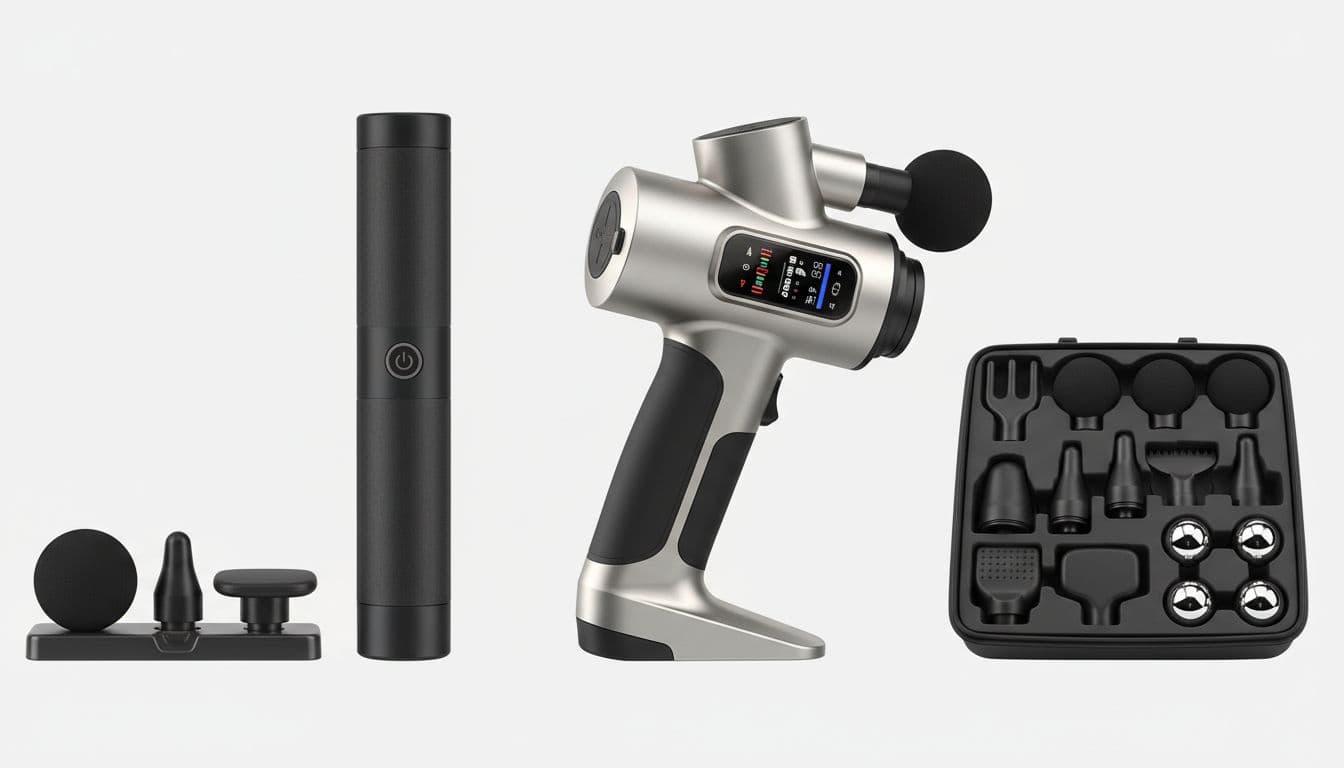
Here’s a practical breakdown before you buy:
| What you care about | Budget models (often under $100) | Premium models (often $200+) |
|---|---|---|
| Feel on the body | Fine for light soreness and quick use | More “planted” feel, especially on big muscles |
| Power under pressure | More likely to slow or stall when you press | Keeps going with moderate pressure |
| Noise | Often louder and higher pitch | Often quieter (more apartment-friendly) |
| Battery and charging | Battery can fade faster, charge time varies | More consistent runtime, sometimes faster charging |
| Ergonomics | Basic straight handle, harder reach | Multi-grip designs and better balance |
| Build and warranty | Can be hit-or-miss | Usually sturdier, better support |
| Extras in 2026 | Mostly basic attachments | More heads, sometimes heat or cold options, often guided app routines |
The biggest premium upgrades in 2026 tend to be quieter motors, better batteries, and guided app programs that remove guesswork. Apps aren’t required, but they can help you keep sessions short and consistent, especially if you’re the type to overdo it.
Money-saving truth: The best Massage Gun is the one you can use comfortably, several times a week, without dreading the noise or the grip.
Common cheap-device problems to watch for
Not all lower-cost devices are bad, but some issues show up again and again:
- Rattling and “head wobble” at higher speeds, which feels rough on the skin.
- Weak battery that drops power quickly or won’t hold a charge over time.
- Limited warranty or hard-to-reach support if something fails.
- Attachments that don’t lock in well, so they loosen mid-session.
If reviews mention overheating, sudden shutoffs, or attachments popping off, take that seriously.
A simple decision rule that works
Keep it easy:
- Go mid-range if you’ll use your Massage Gun weekly. You’ll usually get enough power, better comfort, and decent noise.
- Go premium if you need strong deep work on thick muscles and you also want quiet operation. That combo costs more for a reason.
If you’re unsure, choose comfort and noise over “max power.” You can’t benefit from a tool you avoid using.
How to choose the right massage gun for your needs (quick match guide)
Specs matter, but your body type and routine matter more. Use these mini profiles to match the Massage Gun to your real needs, without getting stuck in brand debates.
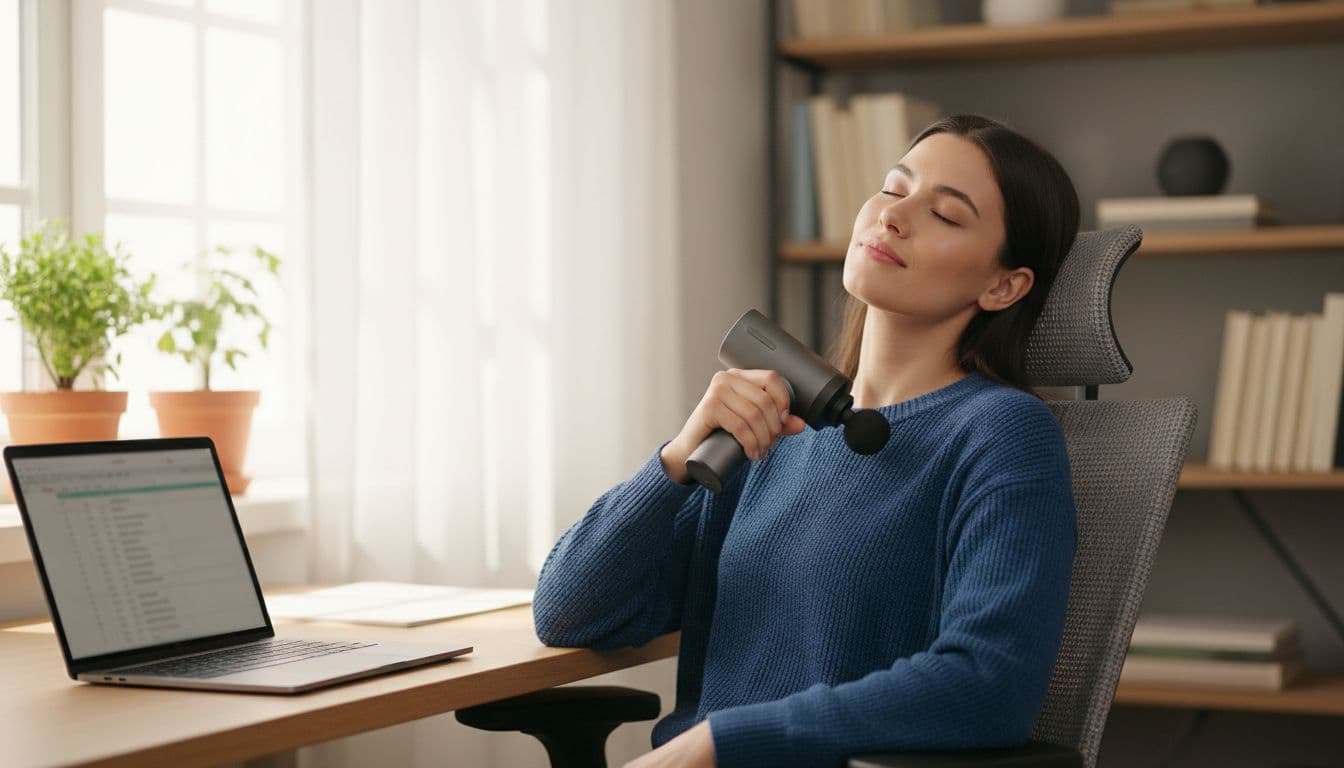
Desk worker with neck and shoulder tightness
Your goal is usually to calm the upper traps, chest area, and the back of the shoulders, not to “smash knots.”
- Best attachments: Ball head for general use, flat head for broader areas.
- Speed preference: Low to medium, avoid max speed near the neck.
- Spec to prioritize: Ergonomics and quiet noise, because reaching your upper back is awkward and you’ll likely use it at home.
Tip: Don’t use a Massage Gun on the front of the neck. Stay on muscle, beside the spine, and keep it moving.
Runner with calves and quads soreness
Runners often need quick recovery work that doesn’t leave them tender the next day.
- Best attachments: Ball head for quads and calves, fork head to work around the Achilles area (not on the tendon).
- Speed preference: Medium for quads, low to medium for calves.
- Spec to prioritize: Battery life and smooth power, because you’ll use it often, and legs need consistent output.
If your calves cramp easily, start lighter than you think. A little goes a long way.
Strength training with glutes and upper back tightness
Lifters usually want deeper work on thicker muscles. This is where weak stall force becomes obvious.
- Best attachments: Ball head for glutes, flat head for upper back and lats, bullet only if you’re careful and experienced.
- Speed preference: Low to medium with moderate pressure, then adjust one step at a time.
- Spec to prioritize: Amplitude and stall force, because glutes and upper back can “eat” weak devices.
If you regularly train heavy, a more powerful Massage Gun can actually feel gentler, because you don’t have to press as hard.
Someone sensitive to pressure
If you bruise easily or you just hate intense sensation, you still can use a Massage Gun. You just need better control.
- Best attachments: Soft ball head or a cushioned head if included, avoid bullet heads.
- Speed preference: True low settings, then only small increases.
- Spec to prioritize: Low-speed control and quiet operation, because harsh vibration feels worse when you’re sensitive.
Use it like a paintbrush, not a hammer. Light pressure, short passes, then reassess.
Traveler who wants compact and quiet
Travel adds stiffness, especially hips, calves, and upper back. However, travel also punishes bulky gear.
- Best attachments: Ball head and flat head, keep it simple.
- Speed preference: Low to medium, enough to relax without making noise a problem.
- Spec to prioritize: Weight, case quality, and noise, plus a charger you can replace easily.
If you fly often, a smaller Massage Gun that you’ll actually pack beats a “better” one that stays home.
Common questions that come up after you buy one
You don’t need a complicated plan to benefit from a Massage Gun. You just need safe timing, reasonable pressure, and a stop button mindset.
How often should I use it?
For most people, 3 to 5 short sessions per week works well. Keep each muscle group to a minute or two. When you do less but stay consistent, your body responds better.
Can I use it every day?
Yes, you can, but daily use should be light and targeted. Save longer sessions for after tough workouts or high-stress days. If an area feels more irritated over time, take a break.
Should it hurt?
No. It can feel intense, yet it shouldn’t feel sharp or make you brace. Aim for a strong pressure you can breathe through. If your jaw clenches, back off.
Can it replace stretching?
Not really. A Massage Gun can make stretching feel easier, because the muscle relaxes first. Still, stretching and strength work are what keep range of motion over time. Use the gun as a warm-up helper, then move.
If you like relaxation-focused recovery instead of doing it all yourself, aromatherapy massage benefits can be a great complement on weeks when stress is the main problem.
Can it help with back pain?
Sometimes it helps with muscle tightness around the back, especially hips, glutes, and upper back. Don’t use it directly on the spine or bony areas. Also, if pain shoots down a leg, feels numb, or keeps returning, get a professional opinion.
What if I bruise?
Bruising is a sign you used too much pressure, stayed too long in one spot, or used a sharp attachment. Stop on that area until it heals, then restart with:
- Lower speed
- Lighter pressure
- Shorter time (20 to 40 seconds per pass)
If you bruise easily, or you take blood thinners, check with a clinician before using a Massage Gun.
How do I store it?
Store it like you would any battery tool:
- Keep it dry and clean.
- Don’t leave it in a hot car.
- Charge it before long storage, and top it up monthly if you don’t use it often.
- Use the case if you have one, because dust in vents can shorten lifespan.
Can two people share it?
Yes, as long as you treat the attachments like gym equipment. Wipe the head before and after each person, and don’t share it over broken skin. If one person is acne-prone or gets folliculitis, cleaning matters even more.
Why Nairobi Spa Sells The Best Massage Guns
Most people buy a Massage Gun the same way they buy a blender, they pick one that looks strong, then hope it works. The problem is, your body isn’t a smoothie. If the device feels harsh, stalls under pressure, or comes with useless attachments, it ends up in a drawer.
Nairobi Massage & SPA takes a different approach. The focus is simple: sell massage guns that feel good on real bodies, hold up to regular use, and make self-care easier, not louder or more complicated.
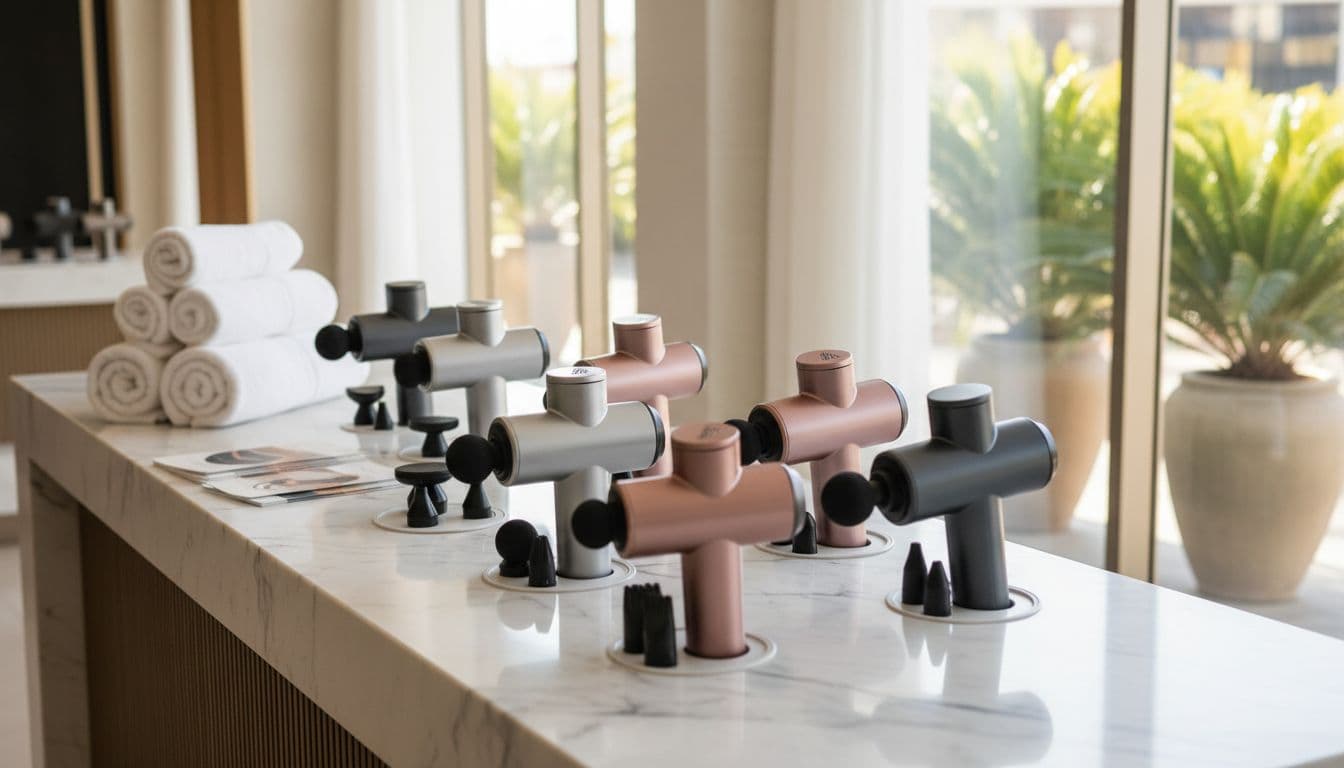
They choose models that feel like a massage, not a power tool
A great Massage Gun should feel smooth and controlled, even when you hit a tender spot. That “smoothness” usually comes from a stable motor, consistent power, and attachments that don’t wobble. When those basics are right, you don’t have to press hard to get relief.
Nairobi Spa focuses on the experience on skin and muscle, not just the spec sheet. That matters because most people use a gun on calves, quads, glutes, and shoulders, areas that can get irritated fast if vibration feels choppy. The right unit feels more like steady hands, not like a jittery drill.
You also benefit from safer intensity control. Instead of jumping from “barely there” to “too much,” better devices give you useful low and mid speeds. As a result, you can keep sessions short and still feel the difference.
A simple test: If you can relax your jaw while using it, the Massage Gun is doing its job. If you tense up, it’s too aggressive.
The selection matches how people in Nairobi actually use a massage gun
Nairobi life has its own kind of muscle fatigue. Long commutes, desk work, gym sessions, travel days, and standing jobs can all leave the same hot spots, tight hips, heavy calves, stiff upper back. So it makes sense to stock massage guns that fit those patterns.
Based on what’s commonly available in Nairobi shops and online, most buyers want a few practical things: multiple speeds, quiet motors, portable size, several heads, and solid battery life. Those are also the basics called out by local retail listings (for example, common features highlighted by Nairobi sellers include speed levels, portability, quieter motors, attachment variety, and long battery life).
Where Nairobi Spa stands out is how those features get filtered for real use. Quiet matters when you share a space. Grip comfort matters when you’re trying to reach your upper back alone. A stable battery matters when you want a quick session after work and the device isn’t charged to 100%.
Instead of selling “one model for everyone,” the better approach is matching the tool to the person. That’s how you avoid buying something powerful on paper but annoying in daily life.
They prioritize safety and proper use, not just the sale
Plenty of people hurt themselves with a Massage Gun by doing one of three things: pressing too hard, staying too long on one point, or using the wrong head near sensitive areas. A seller who cares will steer you toward a model that makes safe use easier.
That means practical choices like a comfortable handle (so you don’t white-knuckle it), a true low speed (so you can start gently), and attachments that spread pressure well. In other words, the device helps you follow the “let the gun do the work” rule you saw earlier in this guide.
It also fits Nairobi Spa’s bigger wellness mindset. Some days, a Massage Gun is perfect. Other days, your body needs hands-on work, especially when tension keeps returning. If you want to compare options, Nairobi Spa’s service menu for massage therapy types helps you decide when to book a session instead of trying to DIY everything.
Better value comes from durability, not extra gimmicks
A Massage Gun doesn’t need ten flashy modes to be worth it. It needs to last, stay consistent, and feel good enough that you actually use it. Otherwise, “cheap” becomes expensive because you replace it, or you stop using it.
Nairobi Spa’s product choices lean toward value you can feel over time:
- Consistent power under light to moderate pressure, so you don’t keep pushing harder.
- Useful attachments, so you can cover big muscles without irritating small areas.
- Quiet, stable operation, so it fits apartment life and late evenings.
- Practical portability, because recovery shouldn’t be stuck at home.
If your goal is simple, looser muscles and less soreness with less effort, that kind of boring reliability is exactly what makes a Massage Gun “the best” for most people.
Conclusion
A Massage Gun can be a simple, effective way to manage tight muscles, speed up warmups, and take the edge off soreness, as long as you use it with control. Start gentle, choose a soft head, and stay on muscle (not bones, joints, or the front of the neck). Most importantly, keep sessions short, 1 to 2 minutes per area and about 10 to 15 minutes total, because more time often means more irritation.
Next, pick one routine and stick to it for a week. Use a quick pre-workout pass to wake up the muscles, or a slower post-workout glide to calm them down. Then track what changes, for example, better sleep, easier squats, less calf tightness after walking, or fewer “stuck” shoulders at your desk. Consistency beats intensity every time, and control is what makes the tool feel like recovery instead of punishment.
Still, listen to your body. Stop right away if pain feels sharp, burning, electric, or if you notice numbness, swelling, or symptoms that feel wrong. When a problem keeps coming back, pair home sessions with skilled hands, a targeted session like deep tissue massage can help you work through stubborn patterns safely, and help you use your massage gun smarter between visits.